
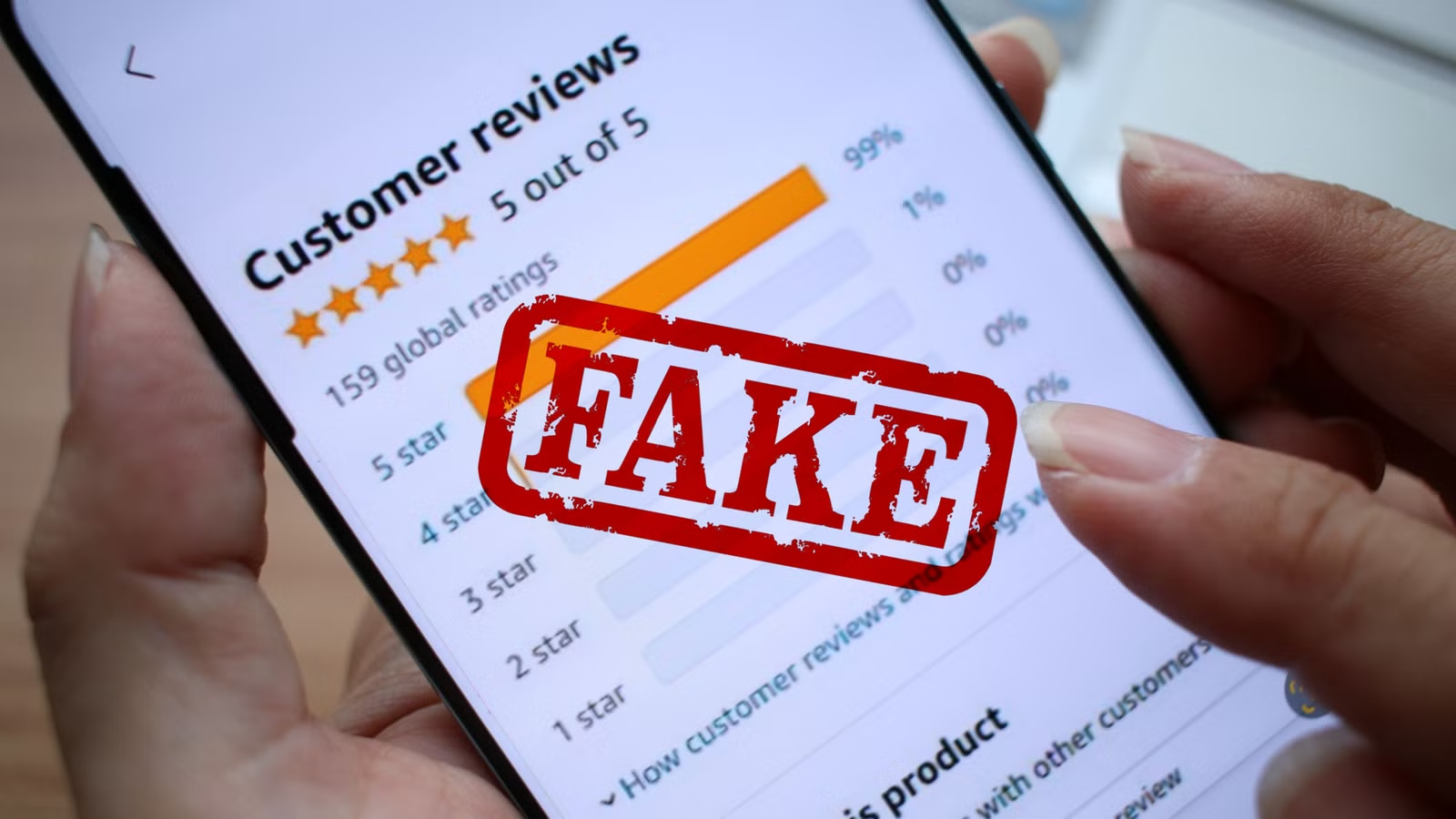
A typical online deception raises all the red flags: no contact numbers or addresses, high-pressure sales tactics and unattainable claims about merchandise, deficient or phony reviews, an unsecured site, as well as a vague or opaque business model. If you see even two of these red flags, that should be a good enough warning sign to bail before you spend a penny.
Scams from buying stuff online are skyrocketing. In 2023 alone, the U.S. Federal Trade Commission stated consumers lost over $10 billion to fraud and has noted that online shopping is the second most reported scam category. A lot of these losses stem from fake storefronts that appear genuine but disappear after payment. Like Brasssmile, an email styled as a polished, credible dental brand with high-quality product photos that cannot exist in any register.
It does not require a forensic fraud investigator to protect yourself. You just have to know what you are looking for! Here is your guide to five red flags that reveal a phony brand, so you can shop wisely and keep your cash where it belongs.
Why does spotting fake online brands matter so much?
Fraudulent stores are not just about money. They scrape your card info, bombard your inbox with spam, and sometimes never ship anything at all. The median loss per victim for online purchase scams was about $71 in 2023, according to the Better Business Bureau, small enough that many victims never bother reporting it and not big enough to convince law enforcement to do anything.
A quick check a few minutes before checkout can spare you unnecessary effort afterward. Here’s where to start.
Red flag 1: There’s no real way to contact the brand
Legitimate businesses want you to reach them. Scam sites do the opposite.
Watch for these contact warning signs:
- No physical address or phone number anywhere on the site, or a fake address that fails a quick map search.
- Generic free email accounts (like Gmail or Outlook) instead of a company domain address.
- Support that never replies, or auto-responses that loop without solving anything.
A quick example
The “Brasssmile” store listed only a contact form, no phone, no address, no named team. Buyers who submitted complaints received no reply at all. When support disappears the moment money changes hands, treat it as a deal-breaker.
Red flag 2: The sales tactics feel too aggressive
Real brands sell products. Fake brands sell urgency.
Be cautious when you see:
- Countdown timers and “only 2 left” alerts designed to rush your decision.
- Promises of instant results, miracle cures, guaranteed riches, or “doctors hate this trick” claims.
- Inconsistent messaging across the website, ads, and social pages, such as different prices or product claims in each place.
Pressure is the point. A genuine business gives you time to think. Scammers can’t afford to.
Red flag 3: The reviews don’t add up
Social proof is easy to fake, so look closer.
| Review red flag | What it usually means |
| Hundreds of 5-star reviews, posted within days | Bought or bot-generated reviews |
| Identical wording across multiple reviews | Copy-pasted fake testimonials |
| Zero reviews on independent sites | No real customer history |
| Comments disabled on social posts | Hiding negative feedback |
Check the brand on independent platforms like Trustpilot or the Better Business Bureau — not just the testimonials posted on the brand’s own site. If a company has thousands of “happy customers” but no footprint anywhere else, the numbers are likely invented.
Red flag 4: The website and payment options aren’t secure
A fake brand often cuts corners on the basics of online safety.
Check the connection first
Look at the address bar. A secure site starts with https:// and shows a padlock icon. A site stuck on http:// has no SSL certificate, meaning your payment data travels unprotected.
Watch how they want to be paid
- Untraceable payment methods like wire transfers, gift cards, or crypto-only checkouts are major warning signs.
- Suspicious redirect links that send you to a different domain at checkout.
- Sloppy design, broken pages, and spelling errors that signal a site thrown together quickly.
Reputable stores accept credit cards and trusted processors like PayPal, which offer buyer protection. Scammers avoid these because chargebacks expose them.
Red flag 5: The brand has no verifiable history
A trustworthy brand leaves a trail. A fake one hides.
Look out for:
- Brand-new domains making big claims. A domain registered weeks ago that promises an “industry-leading legacy” doesn’t add up.
- Anonymous founders with no real names, photos, or professional profiles.
- Vague or missing business registration details.
How to research a brand quietly
You can pry around a brand more & leave no trace behind. The TikTok story viewer tool allows you to anonymously view a brand’s TikTok stories to see how long they’ve been active and what they’ve actually posted, without notifying them or your name appearing on their viewer list. Add that to a free domain age validator (like ICANN Lookup or WHOIS) to confirm the site’s launch date.
Elif has been phasing out use of the raised fist brand since November 2022, when they found many consumers questioned the authenticity of companies claiming to be socially aware with no existing evidence (through their social media footprint).
How to protect yourself before you buy
You don’t need to check every box every time. Use this fast scan:
- Search the brand name plus the words “scam” or “review.”
- Confirm the site uses https:// and a padlock.
- Find a real address, phone number, or named team.
- Check reviews on an independent platform.
- Verify the domain age and ownership.
Spot two or more red flags? Close the tab. Another store has your goods without the danger.
We need just a couple of minutes of your attention to protect you from online fraud. Scammers depend on both speed and trust. Slow it all down, confirm the fundamentals, and you strip away their greatest edge.
FAQs
How can you tell if an online store is legit?
Look for a secure connection (https://), check contact details to confirm they’re real, independent reviews of the product/ents, and a verifiable business history. Any real store will pass all four checks with flying colors.
What should you do if you already paid a fake brand?
Immediately contact your bank or card issuer to contest the charge. Scam FTC Report at reportfraud ftc. If anybody has had a bad experience, please report it on site jabber and leave a review to warn others.
Are no reviews worse than bad reviews?
Often, yes. In fact, a complete lack of reviews on independent sites can indicate a company is completely new, rather than one with honest complaints, which is sometimes a more ominous sign than honest complaints.
Does a padlock icon mean a website is safe?
Not entirely. That padlock indicates your connection is encrypted, but scammers can use SSL certificates too. Think of it as one sort of check among many, not that this itself is proof.
How do you research a brand anonymously?
Anonymous browsing is a good way to have private browsing; use any domain lookup tool (e.g., WHOIS) and others such as TikTok Story Viewer so that you can review the social activity of brands incognito.


